


Tengrinews.kz — In Almaty, journalists were able to meet the woman who, 30 years ago, became the first child in Kazakhstan to be born through in vitro fertilization (IVF). Until now, her name and details of her life had remained private because her parents did not want to reveal their daughter’s identity.
What path did the family take toward parenthood, when and how did their daughter learn the story of her birth, and what is her life like today?
“In the 1990s, even thinking about high technology seemed crazy”: how it all began
Yulianna Permyakova was born on July 31, 1996, and became the first child in Kazakhstan to be born through IVF technology.
Her birth was the result of the work of a small team of specialists led by reproductive specialist and embryologist Saltanat Baikoshkarova, fertility doctor Tatyana Kopylova (Rubashina), and a nurse named Aina.
Yulianna flew to Almaty from the United Kingdom specifically to meet the medical team whose work made her birth possible.
“I was sure it would work on the first try”: mother recalls
Yulianna came to meet the journalists together with her parents, Larisa and Valery Permyakov.
The couple said they had been unable to have a child for six and a half years before their daughter was born, even though, according to them, both were healthy. They consulted different doctors and tried what seemed like every possible treatment, including folk remedies. But nothing worked.
One day, the couple happened to learn that IVF was being used experimentally in Almaty. They decided to try it and did not want to give up what at the time seemed to be their only chance.
Larisa Permyakova admits that at first she did not even fully understand what the method involved.
“But I still really wanted to try something new. For some reason, I felt deep down that this was meant for me and that it would help. What’s more, I believed it would work on the first try,” she recalls.
And that is exactly what happened: Larisa became pregnant after her first IVF attempt. According to her, five embryos were transferred. Two initially implanted, but at seven to eight weeks one stopped developing, leaving only the other.
“Of course, there was a lot of anxiety and a huge emotional high. When I went for an ultrasound and Tatyana Kopylova confirmed the pregnancy, my mind just exploded. It was a victory for both the doctors and our family!” Larisa says with a smile.
Nine months later, Yulianna was born.
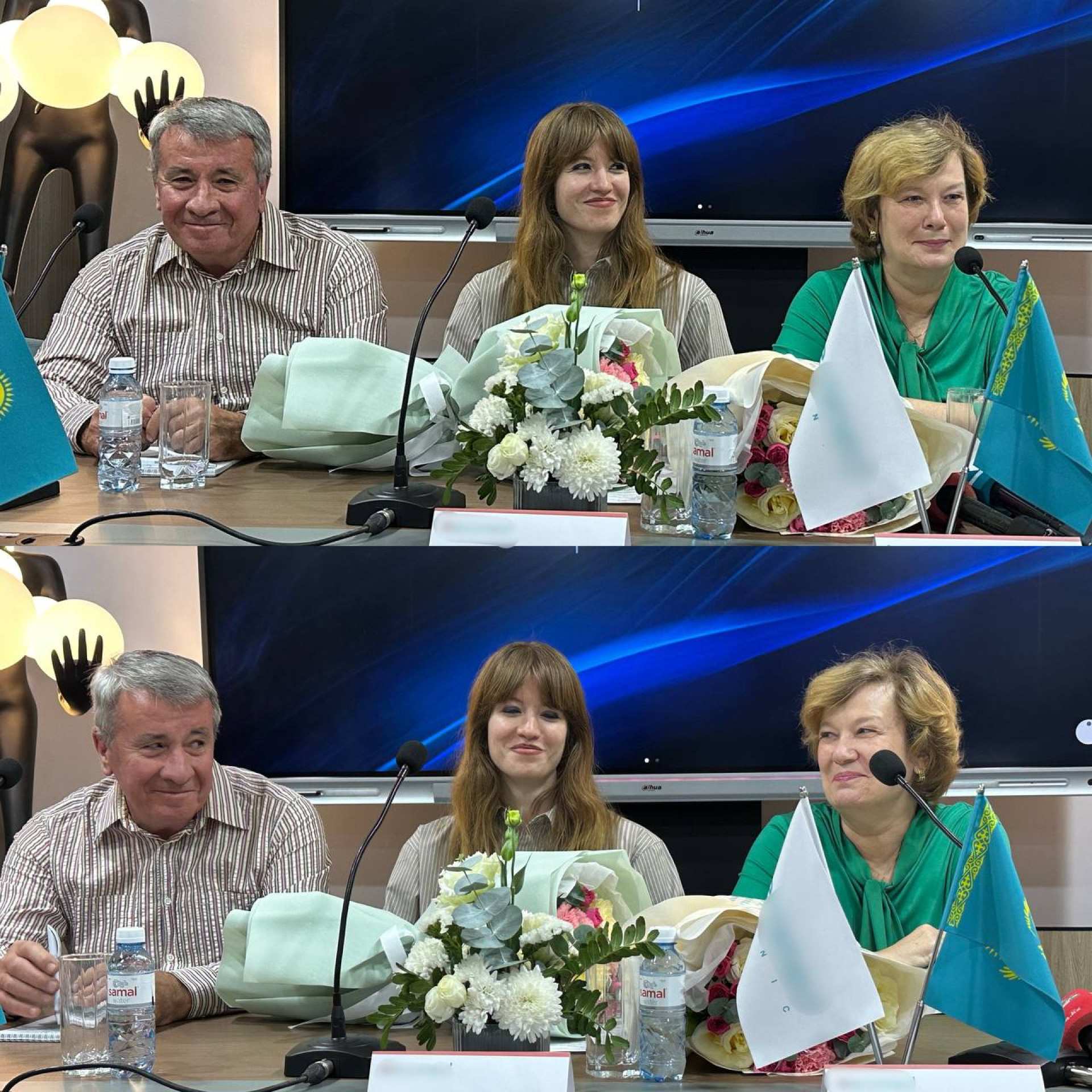 The Permyakov family: father Valery, daughter Yulianna, and mother Larisa. Photo: © Tengrinews.kz/Angela Kim
Later, Larisa tried several more times to become pregnant through IVF, but the attempts were unsuccessful. Yulianna remained the family’s only child.
“I wanted her to have another close blood relative, someone truly her own. But things turned out differently. At the time, I thought fate had given me this chance, I took it, and everything worked on the first try. Apparently, fate decided that was enough,” Yulianna’s mother says.
Although Yulianna became the first child in Kazakhstan to be born through IVF, her parents were in no hurry to tell others about it. In fact, for a long time, Yulianna herself did not know how she had been conceived.
Larisa explains that she and her husband wanted to protect their daughter from unnecessary attention. The family understood how important the event was for the doctors, but they did not want their daughter’s special status to affect her childhood in any way.
“You don’t always know at what age it is best to tell a child such a story or how they will react to it. So we tried to avoid any kind of fuss,” Larisa explains.
Even today, not all relatives and friends know that Yulianna was Kazakhstan’s first IVF baby. Some people close to the family may be learning about it for the first time from the news.
Yulianna herself was no different from her peers. Her mother says she grew up like any other child and never stood out because of the story of her birth.
“The fact that she was the first can simply be seen as a nice bonus. If she had been the second or third, it would not have changed anything in her life at all,” Larisa believes.
“My birth was shrouded in a certain mystery”: how Yulianna learned the truth about her birth
Yulianna herself found out that she had been born through IVF when she was around 20 years old. Her parents did not sit her down for a separate conversation or tell her everything directly. The truth came out almost by chance.
At the time, she had come to Almaty and decided to make an appointment with a gynecologist for a routine annual check-up. Her mother recommended the clinic where Yulianna had been born.
After the appointment, Yulianna and her mother were invited into a separate office. There, her parents began recalling the past.
“The conversation lasted around an hour and a half to two hours, but no one called things by their proper names. Reading between the lines, I came to two conclusions. First, that I had been born through IVF, and second, that I seemed to be the first child in Kazakhstan born this way. When we left the office, I asked my parents in the car if that was true, and they confirmed it,” she recalls.
According to Yulianna, the news did not come as a shock or change the way she saw herself.
“Since childhood, I had felt and known that there was some kind of mystery surrounding my birth, as if something had been kept under lock and key. But I never asked my parents about it. I knew that at some point they would tell me themselves,” Yulianna says.
She admits that once she learned the truth, everything seemed to fall into place.
“The news did not turn my worldview upside down. It was more like completing the picture, adding the final missing piece of the puzzle. There was no shock or major surprise. I simply felt satisfied that I finally knew exactly how I had come into the world,” she says.
“I’m not special, just very lucky”: what Yulianna’s life is like today
Despite her unusual story, Yulianna does not believe that the circumstances of her birth make her special. Instead, she sees herself as someone who was simply very lucky.
“I suppose I’m also persistent and fairly strong. Somehow, all three of those qualities came together, and I turned out to be the embryo that developed, implanted successfully and was eventually born,” she says.
She admits that she feels a certain inner strength and adds with a smile that it seems she has had to fight for something from the very beginning.
At the same time, Yulianna is quite modest about her own role in the story. After all, she says, the main work was done by the doctors and her parents.
“I was simply born. Yes, it happened that I became the first child in Kazakhstan to be born through IVF. But I didn’t invent anything, discover anything or make any significant contribution to our country’s history, unlike Saltanat Baikoshkarova and Tatyana Kopylova,” she said.
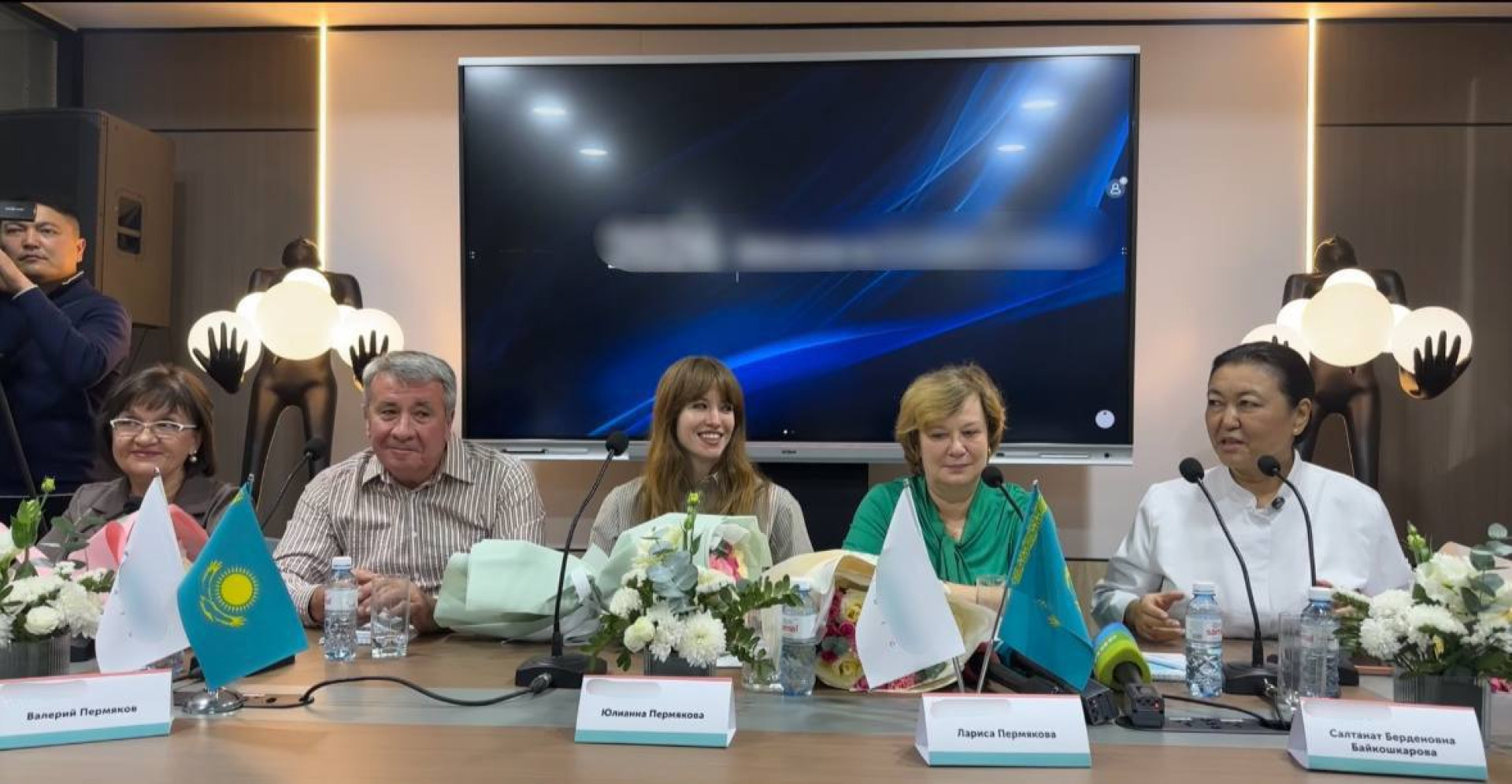 From left to right: fertility specialist Tatyana Kopylova (Rubashina), Valery Permyakov, Yulianna Permyakova, Larisa Permyakova, and fertility specialist/embryologist Saltanat Baikoshkarova.
Today, Yulianna lives in London. After finishing school, she enrolled at Oxford Brookes University in the United Kingdom, where she earned a bachelor’s degree and later completed a master’s degree. Both degrees are related to publishing.
She currently works as a sales representative at an agency that partners with American and British publishers and sells books across Europe, the Middle East, the South Caucasus and Central Asia.
Her choice of profession may also be connected to her family story. Larisa recalls that while she was still pregnant, she decided to read aloud to her daughter:
“I took a large book of Alexander Pushkin’s fairy tales, put my hand on my stomach and told my daughter that from then on she would listen to stories. I don’t know whether it influenced Yulianna’s future in any way, but she now works in publishing and loves reading too. We have a large library,” Larisa says with a smile.
As for parenthood, Yulianna does not have children yet, but she plans to become a mother.
“I was simply born”: why the family decided to tell the story now
The decision to speak openly about Yulianna’s birth for the first time was not easy for the family, as the Permyakovs are not used to being in the spotlight. But after 30 years, Larisa realized there was no longer a need to keep her daughter’s birth story private.
“I think she no longer needs to be protected and shielded so much. She is an adult now and can stand up for herself,” Yulianna’s mother says.
Yulianna admitted that it is important for her to tell the story of her birth above all to thank the people who made it possible — the doctors and her parents.


